

At last, an exciting project that the Trust has been busy scoping now underway – the restoration of the Ataahua saltmarsh wetland. Our Ataahua wetland restoration project has the Christchurch to Akaroa Highway on one side of it and the Little River Rail Trail on the other, so we will be creating ways for the public to enjoy and learn about what’s happening at this site and what it will be like in the future.
In contrast to other parts of Banks Peninsula, this site is unlikely to regenerate by itself due to the density and competitiveness of the rough pasture grasses. Nature needs our help here. However, many parts of this site will also start to naturally regenerate once we’ve planted some areas, removed some of their competitors and restored some of the natural hydrological processes.
We will be choosing plants for both freshwater wetland along Graylees Stream and salty sites where the lake water reaches. We are starting out modestly with a trial of six small areas. We’ve recently completed the first planting with 600 plants – saltmarsh ribbonwood (Plagianthus divaricatus) and saltmarsh rush (Juncus kraussii). We’ll increase the size of areas planted in future planting seasons, having learnt from our trial in the first season. The site is a daunting 34 ha so we’ll be planting seed islands and removing grass to help nature to regenerate itself. We will also investigate how we can reinstate natural hydrological processes and monitor the site using fixed photo-points to assess vegetation change and restoration success over time. Nursery spiders will particularly enjoy making their webs in new saltmarsh ribbonwood shrubs.
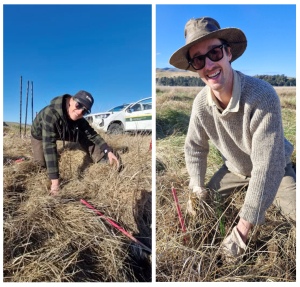
The wetland is protected public conservation land and the Department of Conservation is pleased that we’ve stepped up to take the next step to increase the naturalness of formerly grazed wetland and Te Waihora Weed Strikeforce team is assisting us with planting and maintenance.
This reserve is part of a nationally significant lake-edge ecosystem. In addition to providing essential habitats for threatened and at‑risk species, including wetland birds, invertebrates, reptiles and fish, saltmarsh ecosystems are known to contribute to nutrient cycling, carbon storage, provide important food webs, and are important buffer zones between water-based and land-based environments. This project is another step towards the recovery of the wider lake ecology, which is of high ecological value at both a national and international scale.
Saltmarsh wetlands have saltmarsh plants that arrange themselves into distinct bands based on their salt tolerance. Our site contains patches of glasswort. We’ve tasted it and it’s definitely salty! Saltmarsh wetlands are remarkably effective at capturing and storing carbon in their waterlogged soils. They also act as natural buffers against wave action during storms and floods. They’ll help protect the Christchurch to Akaroa highway from those crazy storms that hit the lake from time to time.
Saltmarsh ribbonwood (Plagianthus divaricatus) is also known as mākaka and it is related to ribbonwood tree or mānatu. It has fascinating survival traits. It is the only native shrub in Aotearoa that can tolerate having its roots submerged in salty estuarine water. It features a dense, tangled web of wiry stems and tiny leathery leaves. Its structure shields it from high winds, coastal storms and salt spray. It looks purple or grey from a distance and becomes deciduous in winter so our newly planted plants don’t currently have many leaves. It produces small, creamy-white flowers with male and female flowers on separate plants. The male flowers have a strong, sweet scent. Its tangle of branches provides a wonderful hiding place for our smallest wildlife.
Saltmarsh rush (Juncus kraussii) is also called wīwī, a name also applied to other rushes and tussocks. It grows no further south than the Rakitata River. It has smooth, yellow-brown to black leaves and stems and black seed heads.
